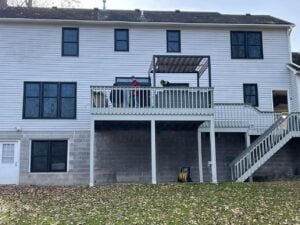
A deck is one of the highest-impact additions you can make to a Rochester home. It extends your living space outdoors, adds real estate value, and gives you a usable area for half the year that most Upstate New York homeowners want but do not have. It is also one of the most climate-exposed structures on your property. Your deck sits outside, unprotected, through Rochester’s full annual cycle: 100-plus inches of snow, weeks of sub-zero cold, rapid spring thaws, hot and humid summers, and everything in between.
That exposure means the material you choose, the way the deck is built, and the quality of the installation directly determine how long it lasts and how much maintenance it demands. A deck built with the right materials and proper construction techniques for Upstate New York will serve your family for decades. One built with the wrong materials or shortcuts will start showing damage within a few years.
This guide covers everything Rochester homeowners need to consider when building a new deck or replacing an existing one: materials, design factors, code requirements, what affects the cost, and how to plan a project that holds up to this climate.
Deck Materials: What Holds Up in Upstate New York
Material selection is the single most important decision in a deck project. The right choice depends on your budget, your tolerance for maintenance, how long you want the deck to last, and how important the visual appearance is to you. Here is how the most common options perform in Rochester’s climate:
The trend in the Rochester market over the last several years has been a strong shift toward composite decking. The higher upfront cost is offset by near-zero maintenance over the life of the deck. Homeowners who have maintained a pressure-treated wood deck through multiple WNY winters understand the annual cycle of cleaning, staining, and replacing rotted boards. Composite eliminates that cycle entirely.
That said, pressure-treated lumber remains the most popular choice for substructure (the joists, beams, and posts underneath the deck surface) even when the decking material itself is composite. The structural lumber is hidden from view, so aesthetics do not matter, and pressure-treated wood performs well as a structural material in this climate when properly built.
What Affects Deck Cost
Size and Layout
A simple rectangular deck is the most cost-effective design. Multi-level decks, wraparound configurations, curved edges, and integrated features like built-in benches or planters add complexity and labor. Square footage is the baseline measurement, but a 300-square-foot deck with three levels and a curved staircase costs significantly more than a 300-square-foot single-level rectangle.
Height and Access
A ground-level deck attached to a walkout basement requires less structural work than an elevated deck attached to a second-floor living space. Elevated decks need deeper footings, taller posts, more robust framing, and a staircase. In Rochester, deck footings need to extend below the frost line (42 inches in Monroe County) to prevent heaving. This means every support post starts with a concrete footing nearly four feet deep, regardless of the deck’s height.
Railing and Stairs
Any deck more than 30 inches above grade requires a railing per New York State building code. Railing material (wood, composite, aluminum, cable) affects both the look and the cost. Stairs add material and labor. If your lot slopes, the staircase may need to be longer or incorporate a landing, which adds additional structure.
Permits and Code Compliance
In Rochester and most Monroe County towns, a deck requires a building permit. The permit process includes a review of your plans for structural adequacy, frost line footing depth, railing height and spacing, ledger board attachment (how the deck connects to the house), and setback from property lines. Building without a permit creates liability, affects insurance, and can cause problems if you sell the home. A licensed contractor handles the permit process as part of the project.
Existing Deck Removal
If you are replacing an old deck, the existing structure needs to come down first. Demolition and disposal of an old deck is a separate cost item. The condition of the ledger board attachment (where the old deck connected to the house) needs to be inspected. Water damage at the ledger connection point is extremely common in Rochester because years of snow piling against the house-to-deck joint forces moisture into the wall sheathing. Addressing this damage before building the new deck is critical.
Rochester’s Climate and Your Deck
Every material choice and construction decision for a Rochester deck needs to account for the conditions the structure will face. Here are the specific factors that matter in this market.
Frost depth and footings: Monroe County’s frost line is 42 inches. Deck footings that do not reach this depth will heave as the ground freezes and thaws, causing the deck to shift, separate from the house, and develop structural problems. Proper footings are non-negotiable here.
Snow load: Rochester decks need to support significant snow loads. A foot of wet snow can weigh 20 pounds per square foot or more. The deck’s joist spacing, beam sizing, and post connections all need to account for this. Code-minimum framing designed for warmer climates is not sufficient here.
Water management at the ledger: The ledger board (where the deck attaches to the house) is the number one failure point in deck construction, and Rochester’s climate makes it worse. Snow piles against this joint for months. Ice dams can form above it. Proper flashing, a gap for drainage, and a waterproof membrane behind the ledger are essential. This is the detail that separates experienced local builders from generic deck installers.
Freeze-thaw on decking surface: Water that pools on the deck surface freezes and thaws repeatedly. Wood with inadequate sealing absorbs this water and deteriorates. Composite and PVC decking shed water without absorbing it, which is why they outperform wood in this climate with far less maintenance.
UV and heat in summer: Rochester summers bring direct sun and heat that can fade and warp decking materials. Darker composite colors absorb more heat and can get uncomfortably hot underfoot. Lighter colors and wood surfaces stay cooler. If your deck faces south or west and gets full afternoon sun, factor surface temperature into your material choice.
Repair vs. Replace: When Does an Old Deck Need to Go?
An older deck is not automatically a candidate for replacement. Some issues can be repaired affordably. Others signal structural problems that make replacement the smarter investment.
Repair is usually sufficient when: a few individual deck boards are rotted or damaged but the framing underneath is solid; the railing is wobbly but the posts are structurally sound; the surface is faded or gray but the wood is still structurally intact; or fasteners are popping or rusting.
Replacement is the right call when: the ledger board connection shows water damage, soft wood, or separation from the house; support posts are rotted at the base; joists are sagging, cracked, or show significant rot; the deck feels bouncy or unstable when walked on; or the deck was built without permits and does not meet current code.
If you are unsure, have a contractor inspect the substructure. The visible deck surface can look fine while the framing underneath is compromised. In Rochester, the underside of a deck is often in worse shape than the top because trapped moisture, lack of air circulation, and direct ground contact accelerate rot in the framing.
Frequently Asked Questions
Q: What time of year is best to build a deck in Rochester?
A: Late spring through early fall (May through October) is the primary deck building season in Rochester. Concrete footings need temperatures above freezing to cure properly, and most material deliveries and installations are easier without snow on the ground. However, planning and design should start in late winter or early spring. Contractors book up quickly once the weather breaks, and starting the planning process in February or March means your project is ready to go as soon as conditions allow.
Q: How deep do deck footings need to be in Rochester?
A: Deck footings in Monroe County must extend to a minimum of 42 inches below grade to reach below the frost line. This prevents ground movement from freeze-thaw cycling from shifting the deck structure. Some builders go deeper for additional stability, especially on sloped lots or in areas with clay soil that expands significantly when wet.
Q: Do I need a permit to build a deck in Rochester?
A: Yes. Most municipalities in Monroe County require a building permit for deck construction. The permit process reviews your plans for structural adequacy, footing depth, railing compliance, setback requirements, and proper attachment to the house. Building without a permit can result in fines, required demolition, insurance complications, and problems when selling the home. A licensed contractor handles the permit application as part of the project.
Q: How long does composite decking last in Upstate New York?
A: Quality composite decking carries manufacturer warranties of 25 to 30 years or more, and most products are expected to last well beyond the warranty period with basic maintenance (periodic washing). Composite handles Rochester’s freeze-thaw cycling, snow loads, and humidity swings without the rotting, warping, and splintering issues that affect wood. The key is choosing a reputable product and ensuring the substructure underneath is built to last as long as the surface material.
Q: Can I build a deck over an existing concrete patio?
A: In many cases, yes. A deck frame can be built on top of a concrete pad using sleepers (low-profile framing) that allow the decking surface to sit above the concrete. This approach works well when the concrete is structurally sound but visually dated. The concrete provides a stable base, and the deck surface gives you the look and feel of a proper deck without the cost of full demolition and new footings. A contractor can assess whether your existing patio is a good candidate.
Q: What maintenance does a wood deck need in Rochester?
A: A pressure-treated wood deck in Rochester should be cleaned and re-stained or sealed every one to three years, depending on sun exposure and weather. Cedar decks need sealing every two to three years. In spring, inspect for boards that heaved or cracked over winter. Replace any fasteners that popped. Check the ledger board connection and support posts for moisture damage. Composite and PVC decks need only periodic washing with soap and water. The maintenance difference between wood and composite is the primary reason Rochester homeowners are increasingly choosing composite for new builds.
Maressa Remodeling builds and replaces decks for homeowners across Rochester, Brighton, Pittsford, Penfield, Victor, Fairport, and the surrounding area. As a full-service remodeling company, we handle everything from footings and framing to the finished surface, railing, and stairs. If you are planning a new deck or your existing one is showing its age, reach out for a free estimate.