The kitchen is the most expensive room in your house to remodel, and it is also the one that adds the most value. That combination makes it the most scrutinized home improvement decision most people make. You want to get it right, spend wisely, and end up with a kitchen that works better than what you have now.
The challenge is that kitchen remodel costs vary enormously depending on the scope of work, the materials you choose, the age and condition of your home, and where you live. A cosmetic refresh (new cabinet fronts, countertops, and paint) is a completely different project from a full gut renovation that moves walls, replumbs the sink, and rewires the lighting. Both are valid kitchen remodels, but the cost difference is substantial.
This guide walks Rochester homeowners through every factor that affects kitchen remodel cost, from the decisions that have the biggest impact on your budget to the timeline and process of a full renovation. It does not give you a single number, because your kitchen is not the same as anyone else’s kitchen. Instead, it gives you the framework to understand what you are paying for and why.
What Drives Kitchen Remodel Cost
Scope of Work
The scope is the biggest cost driver. A kitchen remodel falls somewhere on a spectrum from cosmetic updates to full structural renovation. Understanding where your project falls determines the budget range you should expect.
Cosmetic refresh: Painting or refacing cabinets, new countertops, updated hardware, new backsplash, new light fixtures. The layout stays the same. The plumbing and electrical stay where they are. This is the least expensive option and can transform the look of a kitchen without touching the structure.
Mid-range remodel: New cabinets, new countertops, new flooring, updated appliances, new lighting, possible backsplash. The layout stays mostly the same, but some plumbing or electrical modifications may happen (moving a dishwasher, adding an outlet, relocating a light). This is the most common kitchen remodel scope in the Rochester market.
Full renovation: Everything comes out. New layout, new cabinets, new countertops, new flooring, new appliances, new lighting, new plumbing, new electrical, possibly moving walls or adding square footage. This scope involves every trade: demolition, framing, plumbing, electrical, HVAC, drywall, painting, cabinetry, countertops, flooring, tile, and finishing. It is the most expensive and the most disruptive, but it gives you complete control over the result.
Cabinets
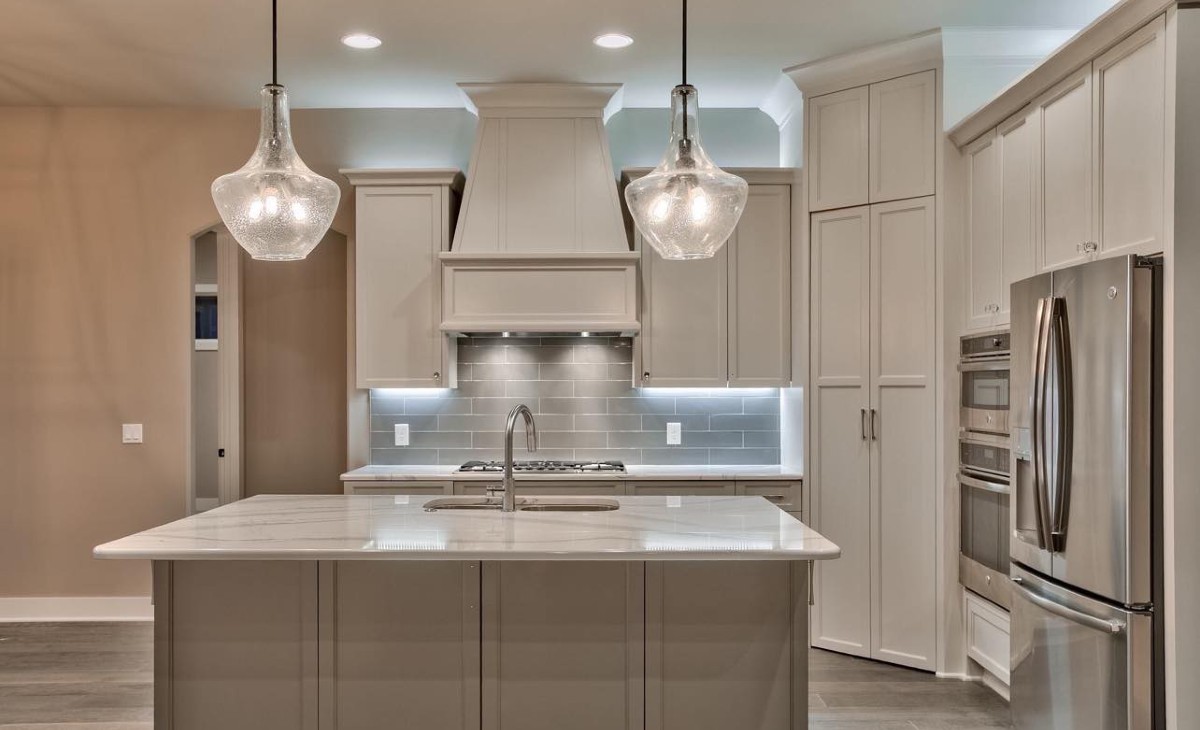
Cabinets are typically the single largest line item in a kitchen remodel. They define the kitchen’s appearance, storage capacity, and functional layout. The cost range within cabinets is enormous because the options span from stock (pre-made, standard sizes) to semi-custom (modified standard sizes with more finish options) to full custom (built to your exact specifications). Stock cabinets are the most affordable. Full custom cabinets cost several times more. The quality of materials (particle board vs. plywood construction), hardware, drawer slides, hinges, and finish all affect durability and price.
Countertops
Countertop material is the second most visible cost decision. Laminate is the most budget-friendly. Butcher block adds warmth at a moderate cost. Quartz and granite are the most popular mid-to-high-end options in the Rochester market. Quartz has overtaken granite in popularity because it is non-porous (no sealing required), consistent in appearance, and extremely durable. Granite remains popular for homeowners who prefer natural stone. Marble is the premium option but requires more maintenance and is susceptible to staining and etching. The countertop cost depends on the material, the square footage of surface area, edge profile, cutouts for sinks and cooktops, and the thickness of the slab.
Flooring
Kitchen flooring needs to handle water, foot traffic, dropped dishes, and daily cleaning. In Rochester homes, it also needs to handle the salt and moisture tracked in from outside during winter months. Tile, LVP, and LVT are the most popular kitchen flooring choices in this market because they are waterproof and durable. Hardwood is an option in kitchens with controlled moisture, but it is more vulnerable to water damage than waterproof alternatives. The flooring cost depends on the material, the square footage, and whether the subfloor needs repair or leveling. flooring options
Plumbing and Electrical
If your kitchen layout stays the same, plumbing and electrical costs are minimal (connecting new fixtures to existing rough-ins). If you are moving the sink, adding a dishwasher in a new location, relocating the range, or adding outlets and lighting, the plumbing and electrical work becomes a significant cost factor. In older Rochester homes (pre-1970s construction is common across Brighton, Irondequoit, Greece, and the city proper), existing wiring and plumbing may not meet current code. Bringing these systems up to code during a remodel is the right time to do it, but it adds to the budget.
Appliances
Appliance costs range from basic builder-grade packages to professional-grade ranges, refrigerators, and ventilation systems. The appliance budget is one of the most flexible items in a kitchen remodel because you choose the specific products. Most Rochester homeowners land in the mid-range: reliable, energy-efficient appliances from established brands without the premium of commercial-style equipment. Your contractor can advise on what fits your layout and budget, but the appliance purchase is typically a homeowner-directed decision.
The Kitchen Remodel Timeline
Understanding the timeline helps you plan for the disruption. A kitchen remodel means your kitchen is out of commission for several weeks (mid-range) to several months (full renovation). Here is the typical sequence:
Total timeline for a mid-range kitchen remodel in the Rochester area is typically 6 to 10 weeks from demolition to completion. Full renovations with layout changes can take 10 to 16 weeks. The planning and design phase before work begins adds another 2 to 6 weeks depending on how quickly decisions are made and how long material lead times run. Custom cabinets, in particular, can have lead times of 6 to 12 weeks from order to delivery.
Rochester-Specific Considerations
Kitchen remodeling in the Rochester market has a few regional factors that national guides do not cover.
Older housing stock: Many Rochester homes were built between 1920 and 1970. Kitchens in these homes often have non-standard dimensions, plaster walls instead of drywall, outdated wiring (sometimes knob-and-tube), and plumbing that needs updating. These conditions add to the scope and cost of a remodel because the contractor is working with an existing structure that may not meet modern building standards.
Seasonal scheduling: Kitchen remodels can happen year-round, but spring and summer are the busiest seasons for contractors in the Rochester market. If your timeline is flexible, scheduling during fall or winter may get you shorter lead times. The trade-off is that winter remodels in homes with limited alternate kitchen space can be more disruptive because you cannot grill outside or use an outdoor cooking setup as easily.
Energy efficiency: Rochester’s heating season runs six months or more. A kitchen remodel is the right time to upgrade insulation in exterior walls (accessible during drywall removal), install energy-efficient windows if the kitchen has exterior walls, and choose Energy Star-rated appliances. These upgrades pay back over time through lower utility bills.
Layout for Rochester living: Many Rochester homeowners use their kitchen as the primary entry point from an attached garage. If this is your situation, the remodel should account for the traffic flow from garage to kitchen (a landing zone for coats, boots, bags) and flooring that handles the daily impact of winter weather being tracked inside.
Frequently Asked Questions
Q: How long will I be without a kitchen during a remodel?
A: For a mid-range remodel, plan for 6 to 10 weeks without full kitchen access. A temporary kitchen setup (microwave, coffee maker, toaster oven, and a utility sink in another room) makes the disruption manageable. Full renovations with layout changes can extend to 10 to 16 weeks. Your contractor should provide a detailed timeline before work begins so you can plan accordingly.
Q: Is a kitchen remodel worth it for resale value?
A: Kitchen remodels consistently rank among the highest-return home improvements. In the Rochester market, a well-executed mid-range kitchen remodel typically recoups 60 to 80% of its cost at resale. The return depends on the quality of the work, the materials chosen, and how the updated kitchen compares to other homes in your neighborhood. Over-improving relative to your neighborhood reduces the return percentage, but under-improving leaves value on the table.
Q: Can I remodel my kitchen in phases?
A: Yes, but it requires careful planning. Common phased approaches include doing cosmetic updates first (paint, hardware, backsplash) and saving the cabinet and countertop replacement for a later phase. The risk with phasing is that each phase involves its own setup, disruption, and contractor mobilization costs. Doing everything at once is more efficient per dollar spent, but phasing makes a large project more financially manageable.
Q: Should I stay in my home during a kitchen remodel?
A: Most homeowners stay in their home during a kitchen remodel, even a full renovation. The key is setting up a temporary kitchen in another room with basic cooking equipment and a water source. Demolition day and any work involving the water main shutoff are the most disruptive moments. If you have young children, pets, or health sensitivities to dust, discuss containment and scheduling with your contractor to minimize exposure.
Q: What is the most important decision in a kitchen remodel?
A: The layout. Getting the layout right determines how the kitchen functions for the life of the remodel. Cabinets, countertops, and appliances can be upgraded later, but moving plumbing, electrical, and walls to change the layout later is a full renovation. The classic work triangle (sink, range, refrigerator positioned for efficient movement) is a good starting framework, but modern kitchens also need to account for prep zones, landing areas, and traffic flow, especially in open-concept layouts.
Q: Do I need to choose all my materials before the remodel starts?
A: Cabinets, countertop material, flooring, and appliances should be selected before demolition begins because they affect the construction sequence and lead times. Paint colors, backsplash tile, hardware, and light fixtures can be finalized later in the process, but having them chosen early prevents delays. Your contractor will provide a selection timeline that maps when each decision is needed to keep the project on schedule.
Maressa Remodeling handles kitchen remodels across Rochester, Brighton, Pittsford, Penfield, Victor, Webster, and the surrounding communities. As a full-service remodeling company, we manage every phase of the project in-house: demolition, plumbing, electrical, cabinetry, countertops, flooring, tile, painting, and finishing. If you are considering a kitchen remodel and want an honest assessment of what your project will involve, schedule a free estimate. kitchen remodeling